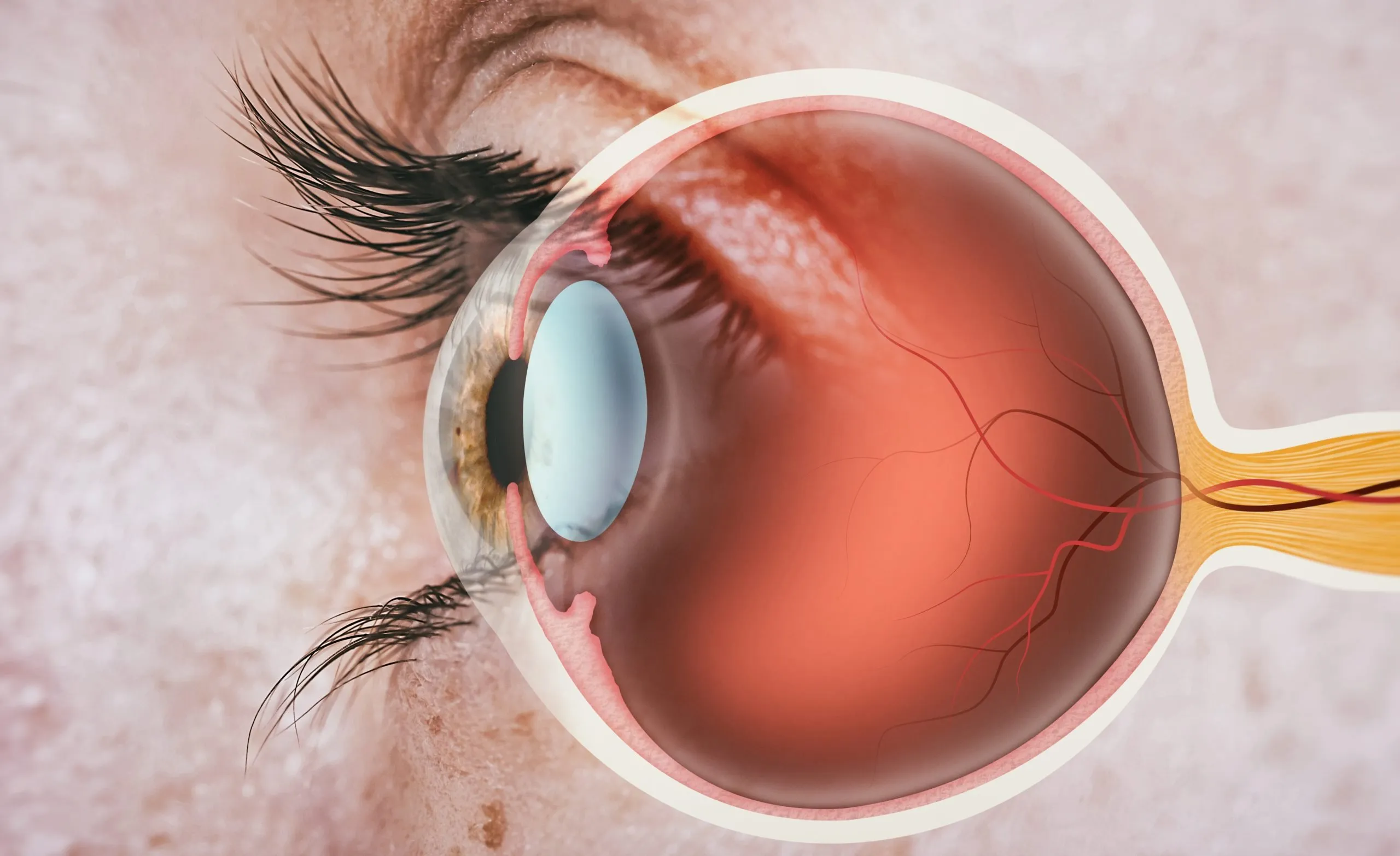
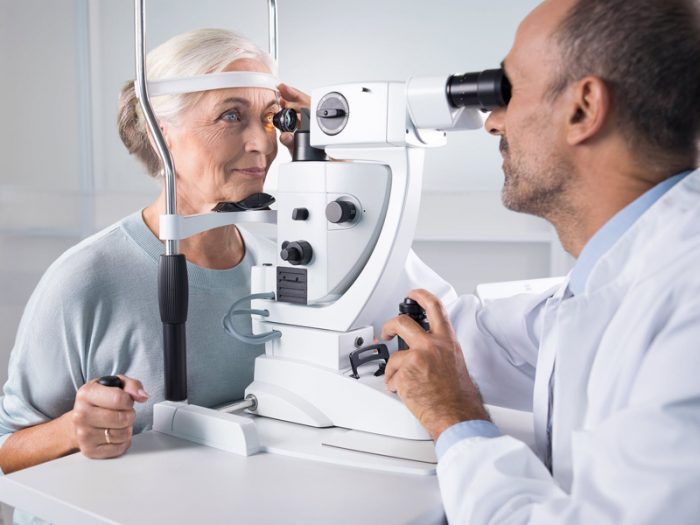
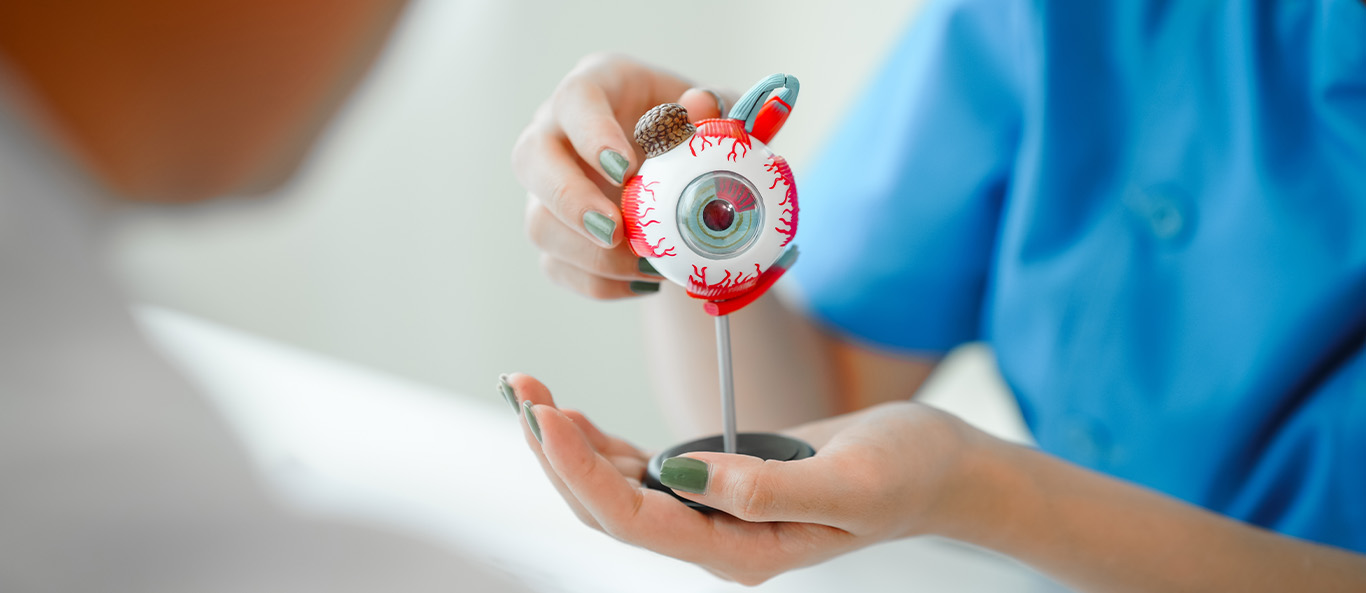
The retina is the nervous tissue inside the eye that converts light impulses into images. Its damage often leads to progressive vision loss or blindness. Because retinal pathologies can develop painlessly and unnoticed, regular screening is essential for timely diagnosis and treatment.
The Main Diseases of The Retina:
Diabetic retinopathy – a common complication of diabetes; causes bleeding, swelling, and possibly blindness.
Maculopathy – damage to the central part of the retina (the macula), which is responsible for sharp, detailed vision; the most common is age-related macular degeneration (AMD).
Retinal degeneration and tears – increase the risk of retinal detachment and sudden vision loss.
Treatment Methods:
Depending on the situation, treatment may include:
Laser therapy
Intraocular injections
Surgical intervention
In all cases, timely evaluation and monitoring are critically important.
Laser Photocoagulation
Laser therapy is a non-invasive, modern method used to:
Remove abnormal blood vessels
Reduce swelling
Stabilize tissue
Laser Types:
Focal laser – to treat macular edema.
Panretinal photocoagulation (PRP) – to prevent the growth of new abnormal blood vessels (diabetic retinopathy).
Circumferential laser – to strengthen the tissue around the area of degeneration to prevent retinal detachment.