General Ophthalmology
General ophthalmology is the main direction of eye health, which includes a complete examination, early detection and management of diseases. A significant part of eye diseases are asymptomatic in the initial stage, which is why they are often detected at an advanced stage.
Serious diseases, such as glaucoma, keratoconus and retinal damage, require timely diagnosis and treatment – otherwise, irreversible vision loss up to complete blindness may develop.
Why Is It Important
- Most eye diseases do not cause symptoms in the early stages.
- Regular examinations allow for early detection and management.
- Sometimes, an eye examination can also be a means of detecting systemic diseases (diabetes, arterial hypertension).
Recommended Examination Frequency
- Adults: Complete eye examination every 1–2 years.
- Over 50 years: Vision and intraocular pressure check twice a year.
Our Services
Full Diagnostics
- Visual acuity testing;
- Measurement of intraocular pressure (glaucoma screening);
- Complete examination of eye (slit lamp biomicroscopy and retinal assessment).
Refractive Disorder:
- Diagnosis of myopia, hyperopia and astigmatism;
- Selection of glasses or contact lenses if necessary.
Age-related Diseases:
- Early detection of cataracts and glaucoma.
- Creating an individual management plan.
Pediatric Ophthalmology
- Screening in preschool and school-aged children.
- Detection and management of amblyopia (lazy eye) and strabismus.
Preventive consultations
- Protecting your vision when working with screens.
- Managing age-related changes.
- Developing healthy habits for eye health.
When Should You Consult An Ophthalmologist?
- Sudden loss or blurring of vision.
- Flashes of light, small black spots.
- Eye pain, redness, swelling.
- Crossed eyes or difficulty seeing in children.
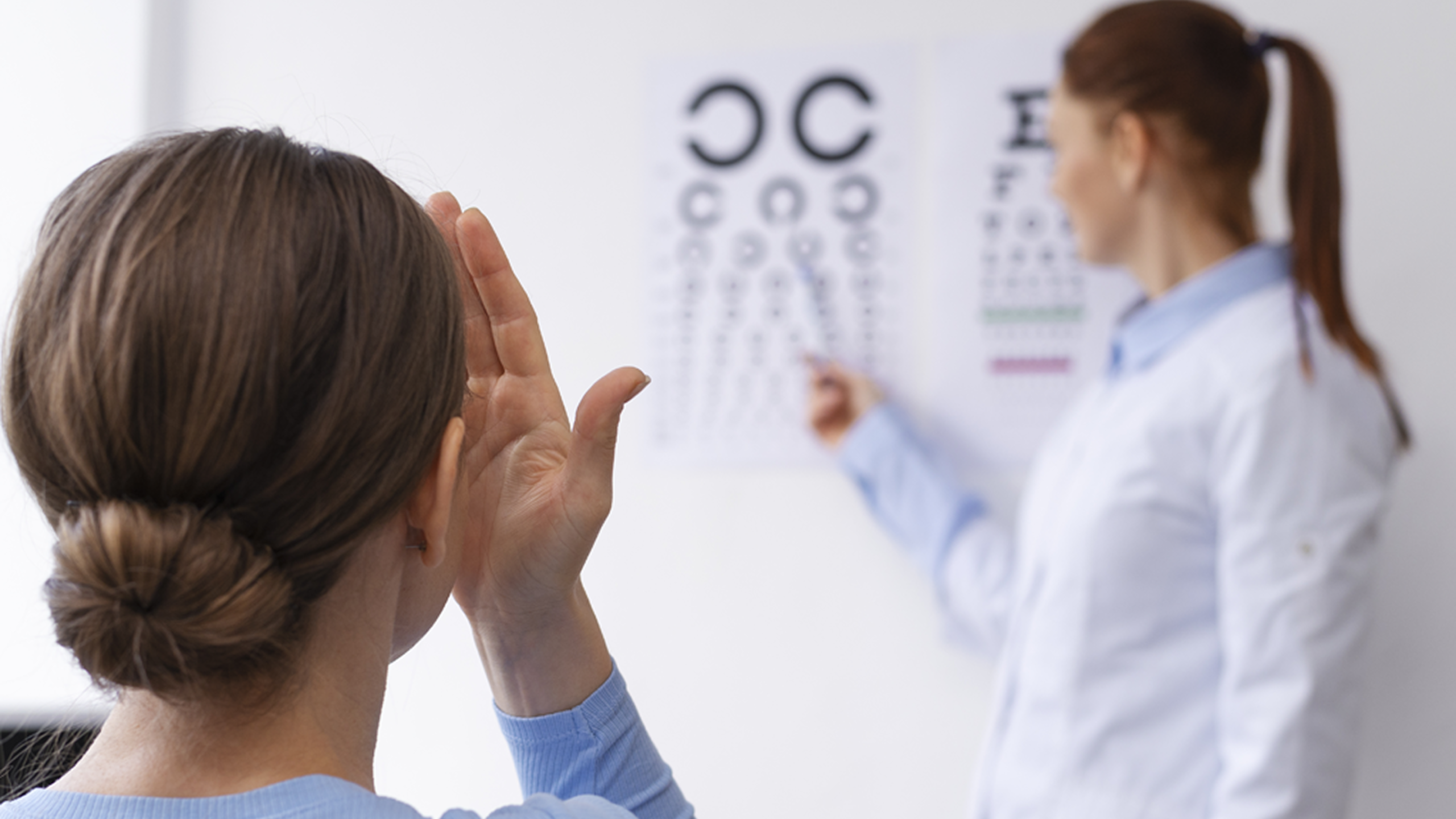
This link allows you to assess your distance and near vision, color vision, and contrast sensitivity.
To correctly complete the self-assessment test for visual acuity, follow the instructions: